Creative hobbies are being blocked by time. 🕰️
Problem
While it may be easier than ever to be exposed to and experiment with potential new creative hobbies, this wide set of choices can make it more difficult to commit to continued learning or practice.
Solution
We discovered that users need something to help motivate them to turn a creative hobby into a creative habit.
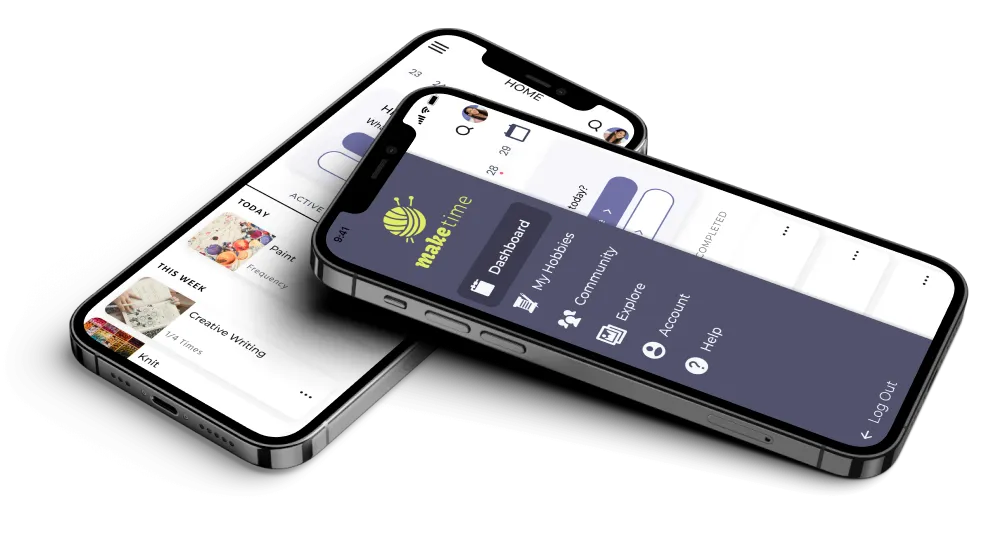
My solution — MakeTime — is a social creative habit tracker that allows users to set goals and reminders, share and chronicle their work, join community challenges, and make a habit of being creative.
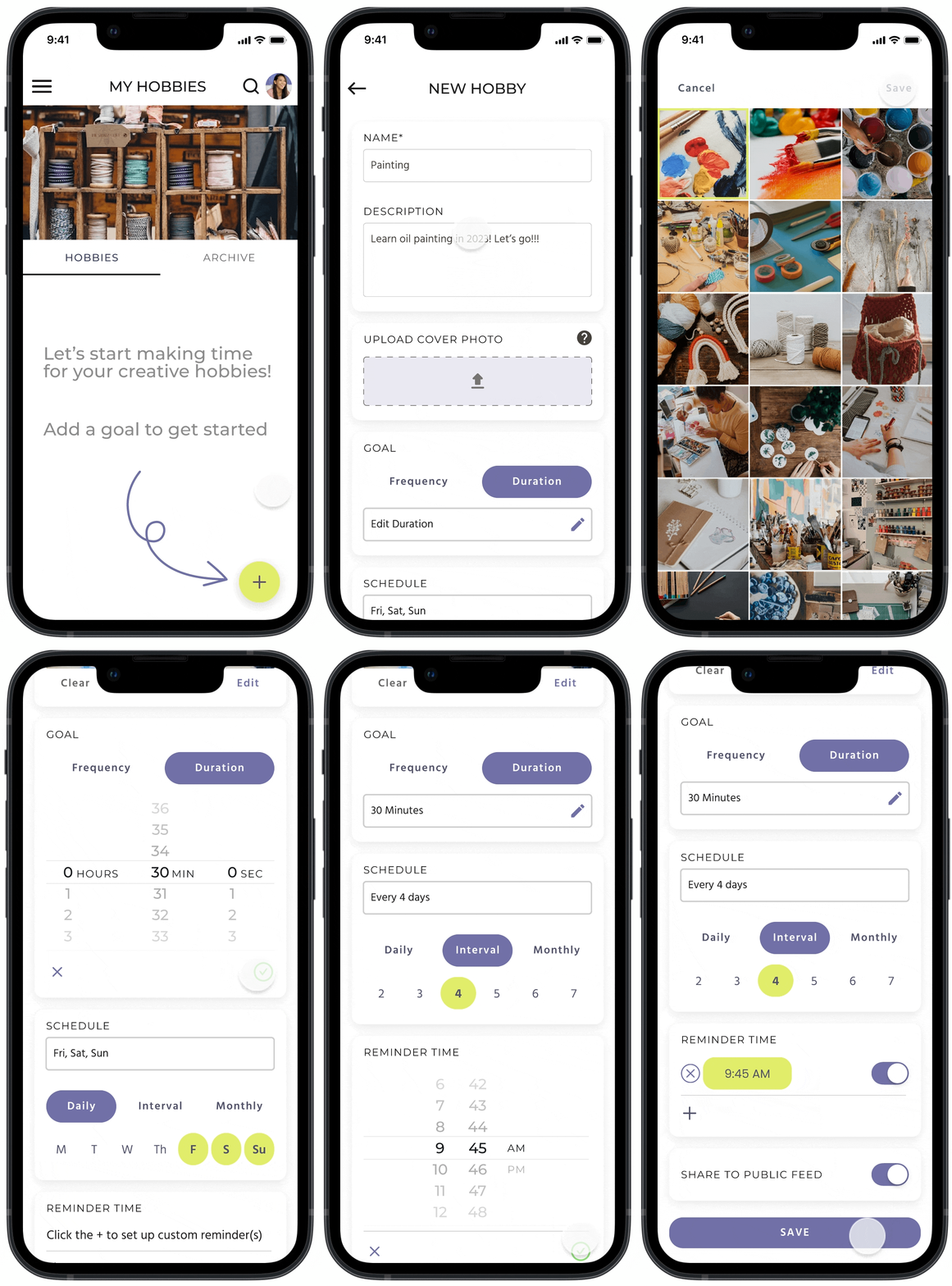
Arriving at this solution required exploratory research to understand the problem space, empathize with users, and uncover their needs.
Seeking to understand creativity
Setting out, we wanted to understand what motivates people to pick up and continue learning creative skills/hobbies.
In order to direct our research we focused on answering three key questions:

Appeal
What draws people to creative hobbies?
Drive
What motivates them to continue practicing their creative hobbies?
Frustrations
What struggles do users attempting to learn a creative hobby face?
Recent events have been a catalyst for increased interest in creative hobbies
Forgive me readers, we must briefly discuss 2020. Feel free to continue to the next section if that's not your bag.
Uncertainty and creativity
Interest in pursuing creative hobbies (and the number of creative hobbies themselves!) grows during times of uncertainty or disruption as the populace turns to activities that bring stability, distraction, community, and comfort.1
A study of pandemic hobbyists
In 2021, researchers K. F. Morse, Philip A. Fine, and Kathryn J. Friedlander conducted a large-scale international survey on leisure and well-being during COVID-192 with 3,827 participants.
Of the 243 unique activities identified in the survey, most of the top 10 most likely to increase and/or to be taken up as new activities during COVID-19 were creative activities.


We uncovered an opportunity space between learning tools and habit tracking tools
To compliment this secondary research on hobbies and habits we conducted a competitive analysis that included both habit-tracking and skill-acquisition focused competitors.

Strengths
- Social and chat functions.
- Private and public habit tracking.
- Share habits with friends.
Weaknesses
- Dated interface.
- Lack of customization.

Strengths
- Personalized onboarding.
- Articles and advice.
- Built in challenges with timelines
Weaknesses
- Steep paywall is alienating to casual users.

Strengths
- Gamification of learning.
- Personalizing learning goals.
- Social Learning.
Weaknesses
- Lack of supplemental materials for learners who need more guidance.
- Streak applies pressure.

Strengths
- Huge variety of courses.
- At-a-glance curriculums.
- Instructor led.
Weaknesses
- Content quality varries considerably.
- Asynchronous learning.
- Cost-per-course.
Creative questions for creative people
What better way to understand potential users and the problems they face then to talk to them directly.
After screening for individuals who either currently have a creative hobby or an interest in obtaining one, we conducted eight, remote, hour-long, interviews with participants ages 27-60.
- How would you describe creativity?
- Tell me about some of your creative hobbies… OR Creative hobbies/crafts you’ve tried.
- What drew you to that/those?
- How did you get started learning it?
- Why or how is it important to you?
- What was the last creative project you finished that you felt proud of? What was the process of creating it like?
- Where did you get the idea?
- Did you learn anything new while working on it?
- Tell me about the early days of learning your hobby...
- In what ways do you feel you have improved since you first picked it up?
- What helped you most on your learning journey?
- Tell me a time that you felt stuck when trying to learn. How did you break out of that or overcome that feeling?
- To you, what is the most exciting thing about learning a new skill? What about the most frustrating thing?
- After chatting with me, does your description of creativity differ or do you have anything to add?
Users are looking for fun but are hindered by time
By breaking apart insights from the individual interviews and reassembling them with affinity mapping we were able to identify some notable trends and patterns.
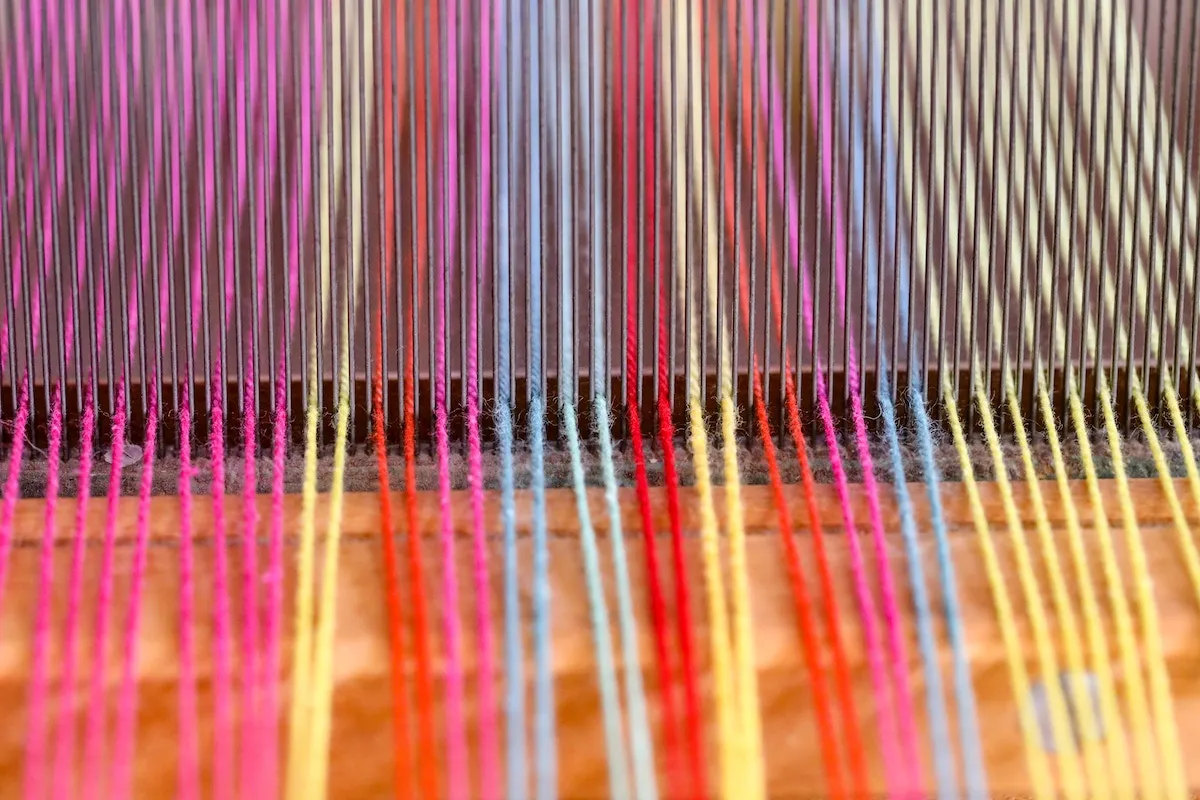
Key Motivators
- Finding Fun
- "It's been fun to learn something...and not take it too seriously."
- Work/Life Balance
- "I'd like to use my brain to do something that isn't work."
- Creating something
- "[I want to be] proud enough to gift it to a friend or family member."

Key Frustrations
- Time management
- "It's the crisis of any creative person: 'I haven't used this time"
- Lack of follow-through
- "I'm always setting goals for myself and rarely meeting them"
- Lack of inspiration
- "The biggest struggle I have is that I don't know what to do?
A vision of who we can help
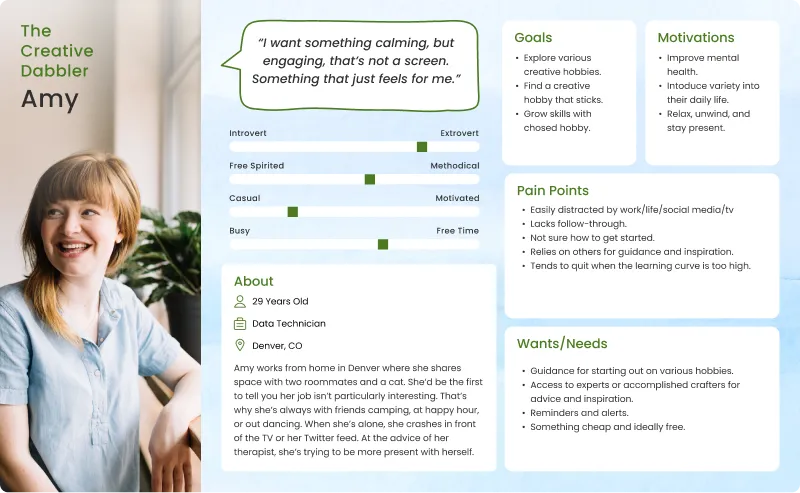
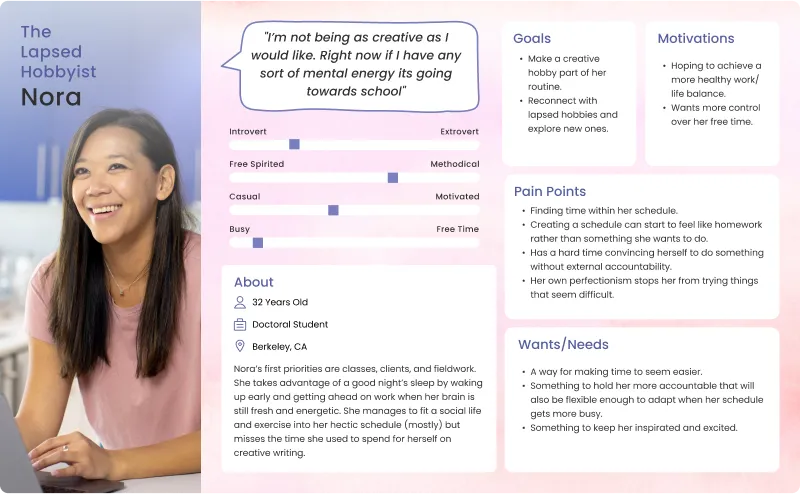
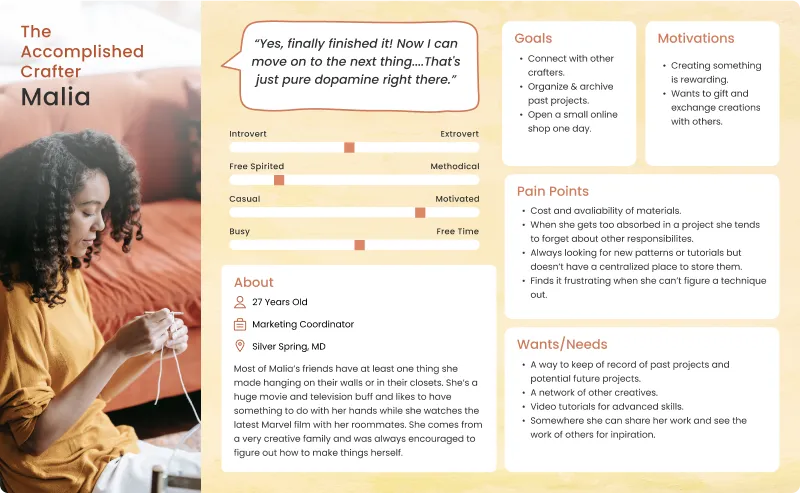
It's true, three is a lot of people to design for! However these three users speak to the longterm lifespan of a creative tool. A dabbler who is just starting out; a lapsed hobbyist who is unsure how to make time; and a creative expert, the aspirational goal and someone this product would hopefully remain relevant for, despite their expertise.
How can we help?
How might we motivate users to commit time to their creative hobbies?
Thinking around the problem
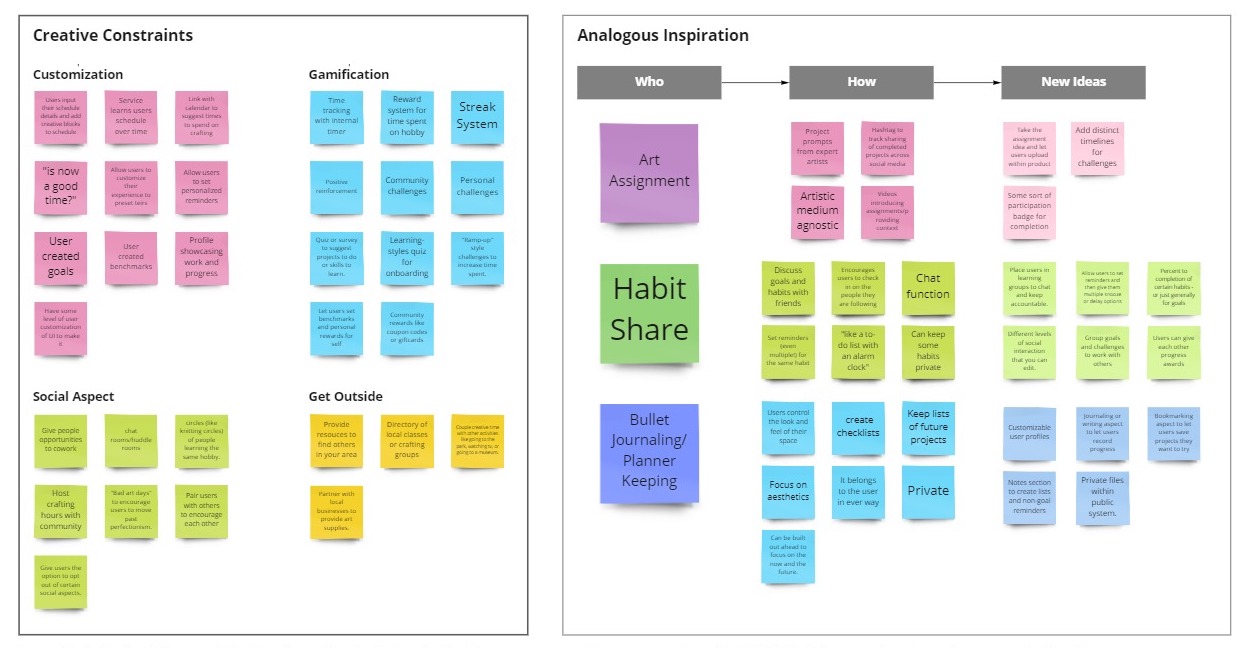
Things are staring to take shape. In order to take the idea from brainstorming to design I created a sitemap.
Eventually, we determined that the most impactful solution would focus on giving my distracted users a tool to schedule time, receive customized reminders, and track their progress. we decided to also explore adding a social element to add extra accountability, something my interview subjects sought.
Everything in its place
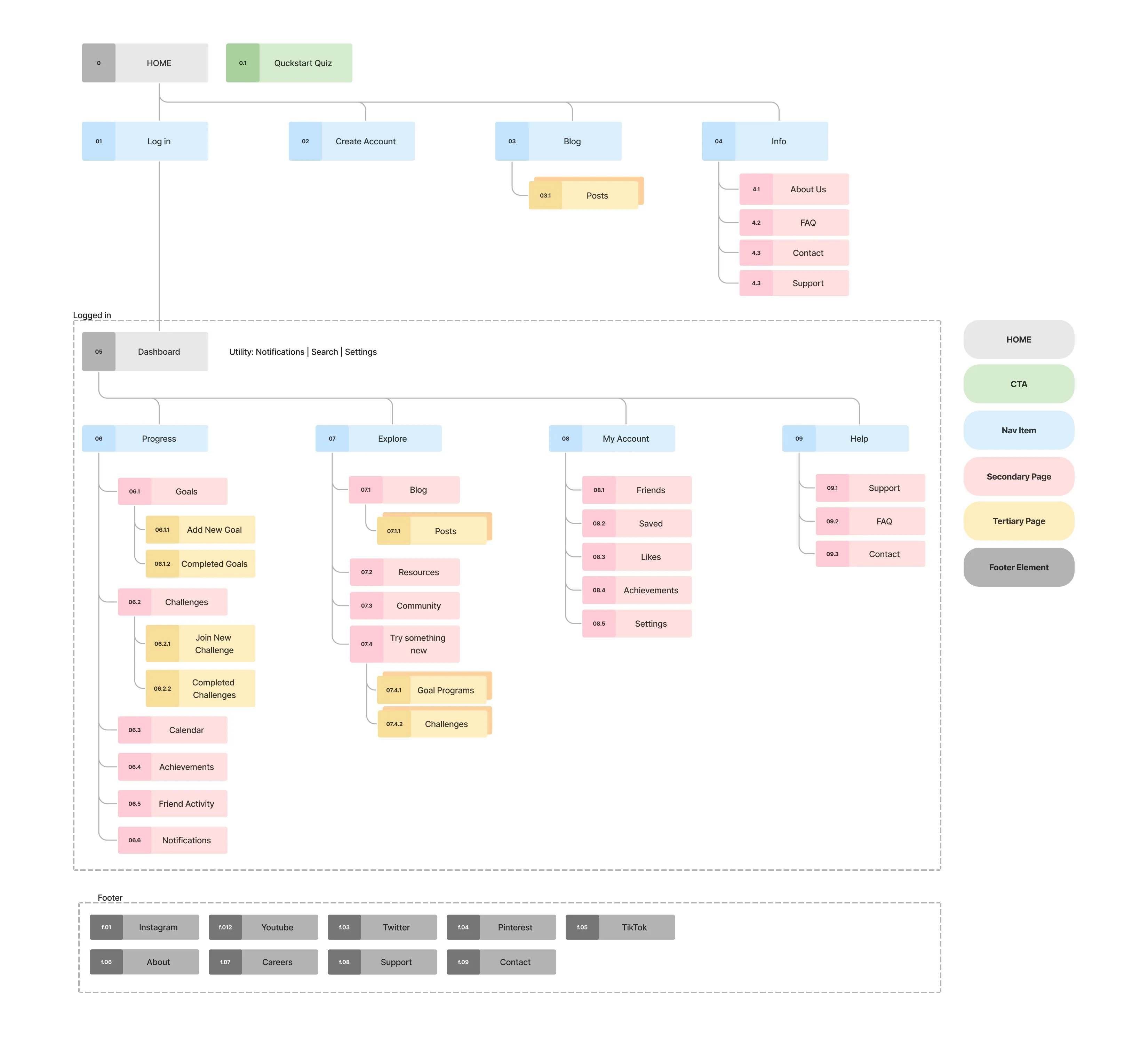
Things are staring to take shape. In order to get everything in place to take the idea from brainstorming to design we created a sitemap.
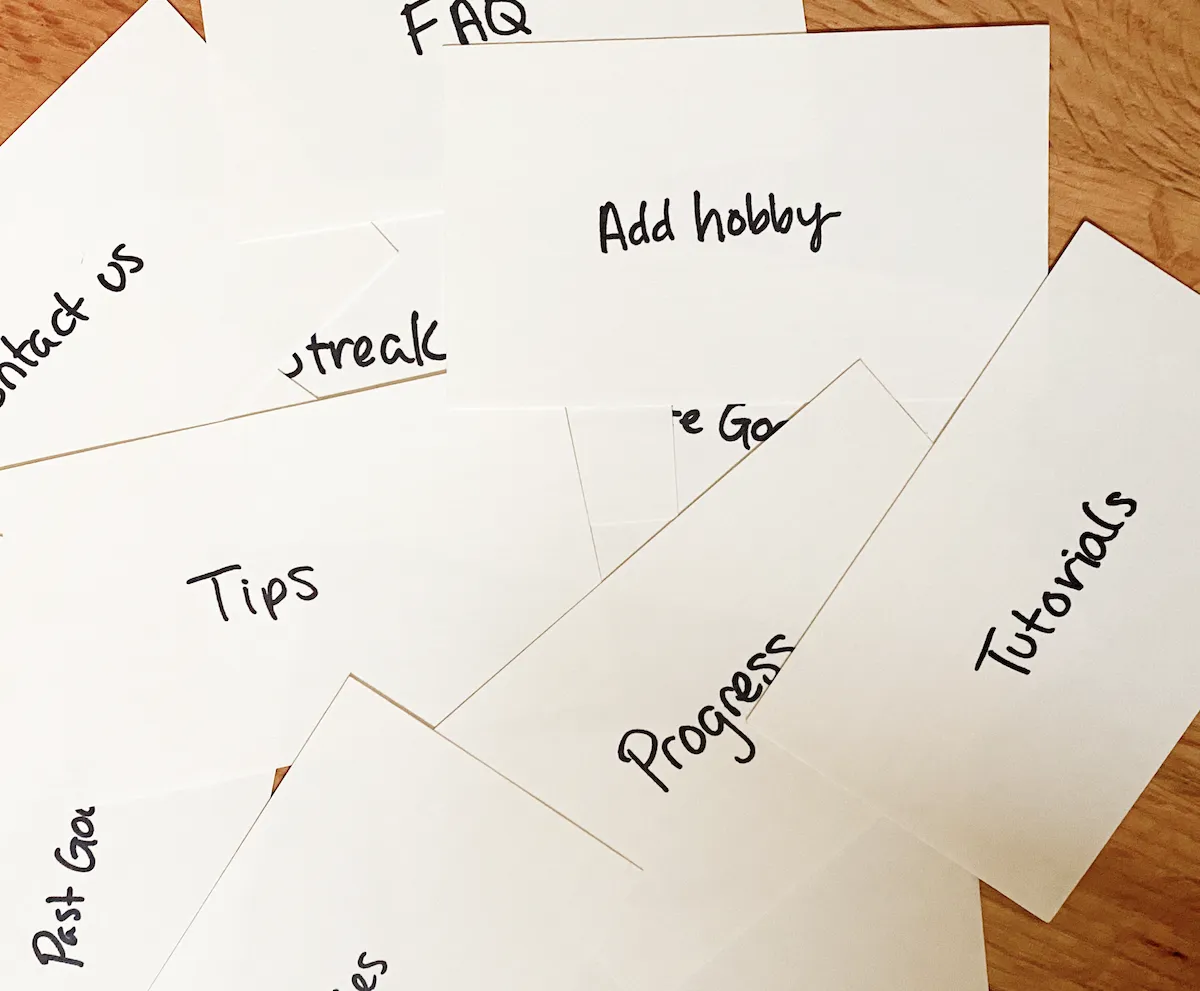
Thought we were done talking to the users? Think again!
In order to put things in useful places on this sitemap we ran 10 unmoderated card sort tests. Here are some of the insights:
- Explore (public focused) and User Dashboard (user focused) were the easiest for participants to categorize — awesome!
- Participants had difficulty distinguishing between Profile and User Dashboard — refine what features go in each!
- Participants who added categories modeled educational content (tutorials, resources) and community content (Find friends, gallery, challenges) differently — these should be distinct areas!
Groundwork for testing
With the sitemap in hand, the next step was outlining key user flows which would become the basis for validating the product features via user testing.

Visualizing the solution
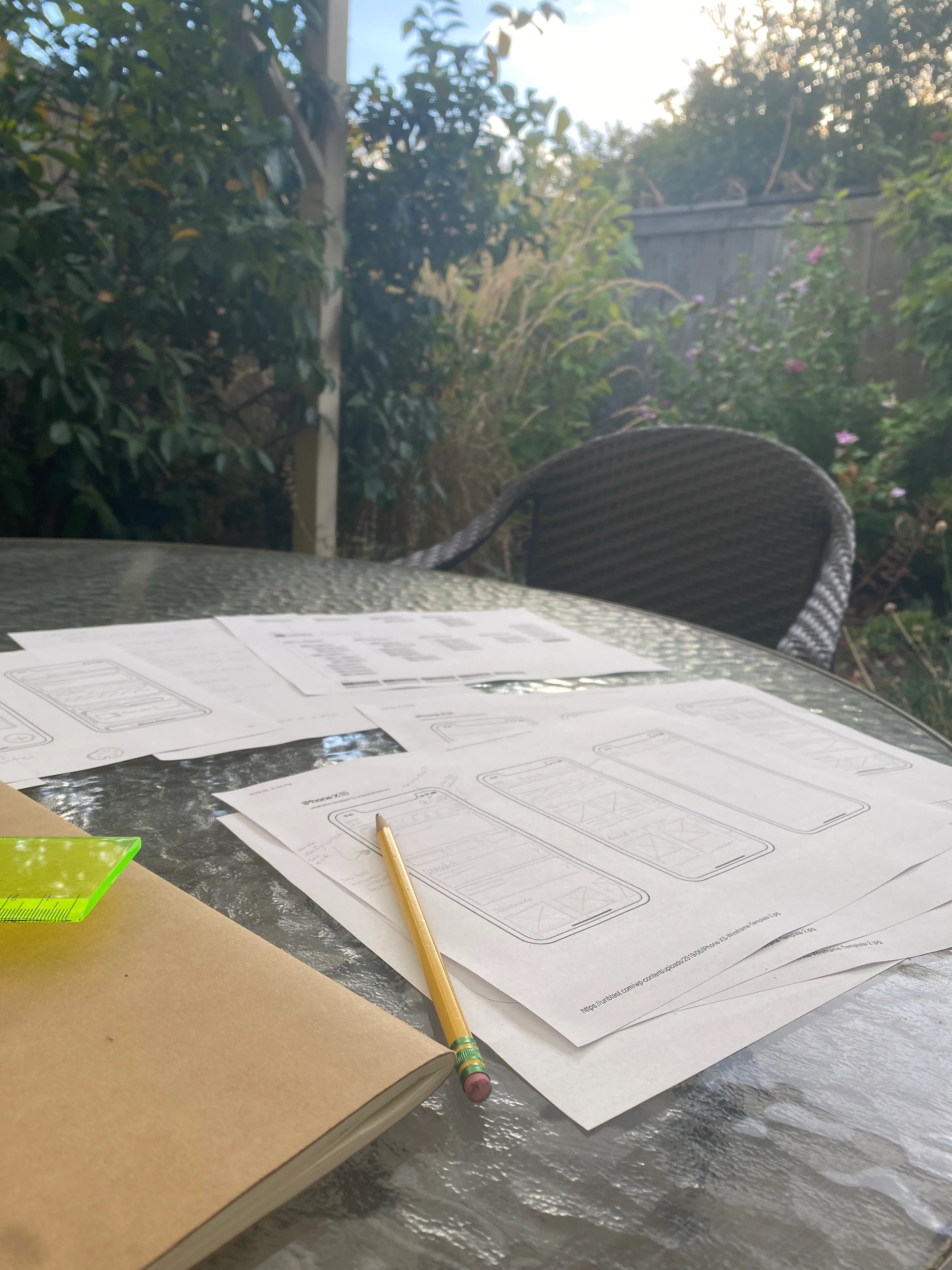
Quick, rough, sketches and a bit of time in the garden allowed for rapid iteratation on ideas and patterns as the product began to take shape.
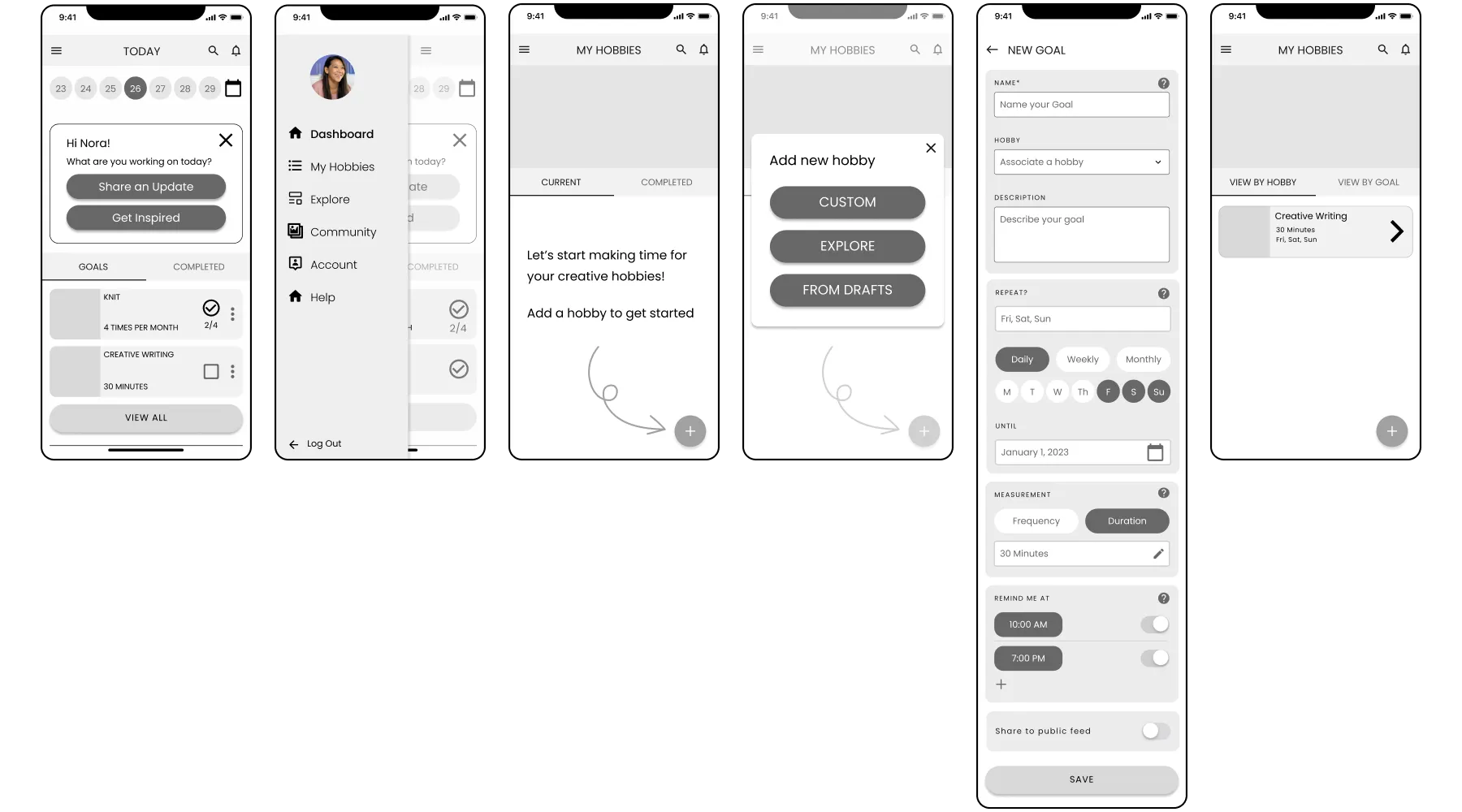
We then turned to Figma to build out the sketches into mid-fidelity wireframes of the flows, creating a roadmap for building UI components, mapping branding and colors, and returning to the users to test the solution.
Crafting a brand identity
Logo & name
Creative, friendly, social, crafty, organized, inspirational, fun, relaxing... can we achieve all those key words with branding? We gave it a shot.
It was key that the branding be non-obtrusive so that UCG could take center stage and we took inspiration from calendars and bullet journals to acknowledge the non-tech solutions to creative time management.

User interface
In order to create design consistency, construct a working prototype, and ultimately aid development. We built a library of UI elements for the app now named: MakeTime.
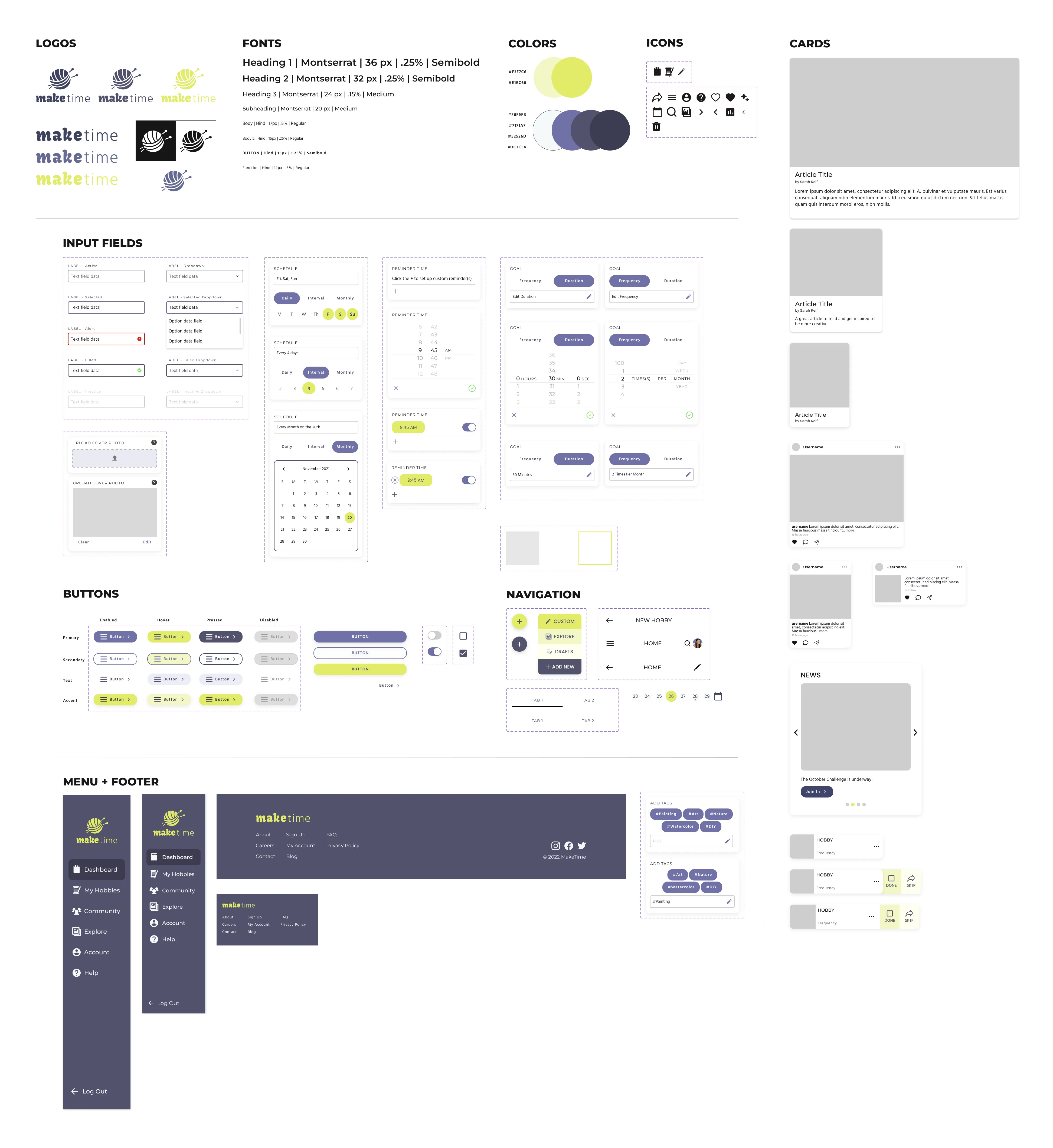
Here's a look at those components in action:
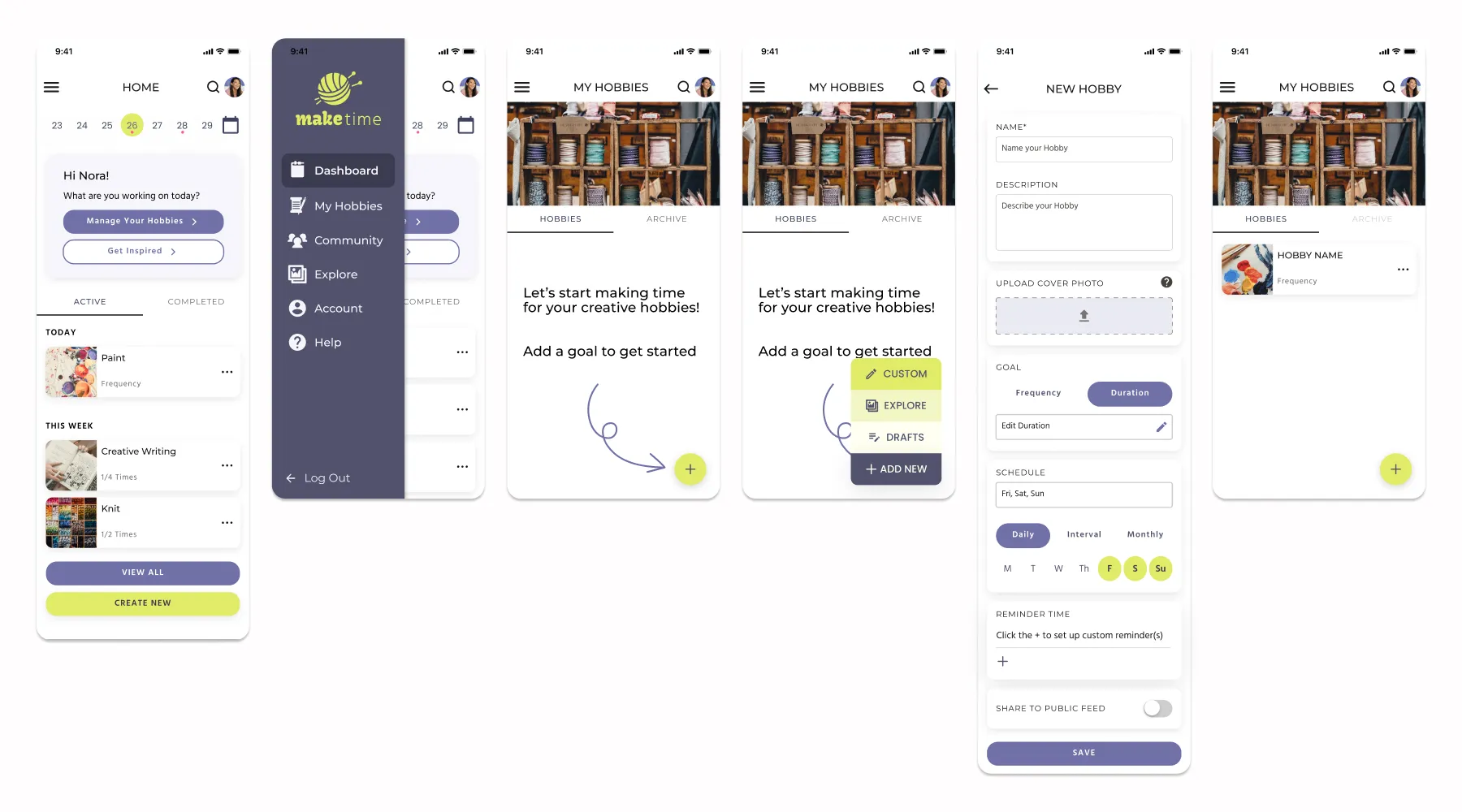
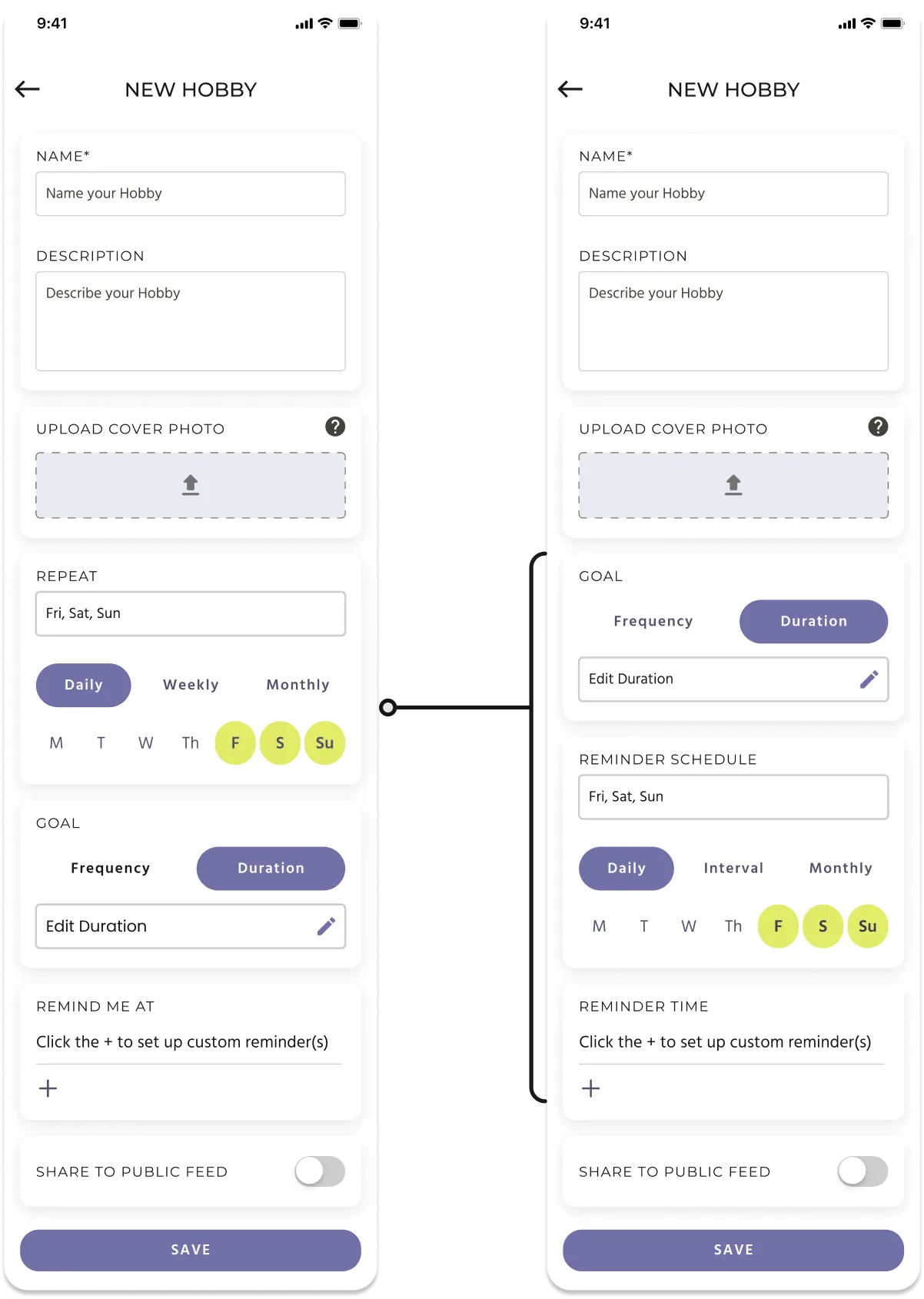
Adding a hobby
MakeTime allows users to add and track creative hobbies. They can set reminders, customize tracking, post journal entries, upload photos to see their progress, and share with others.

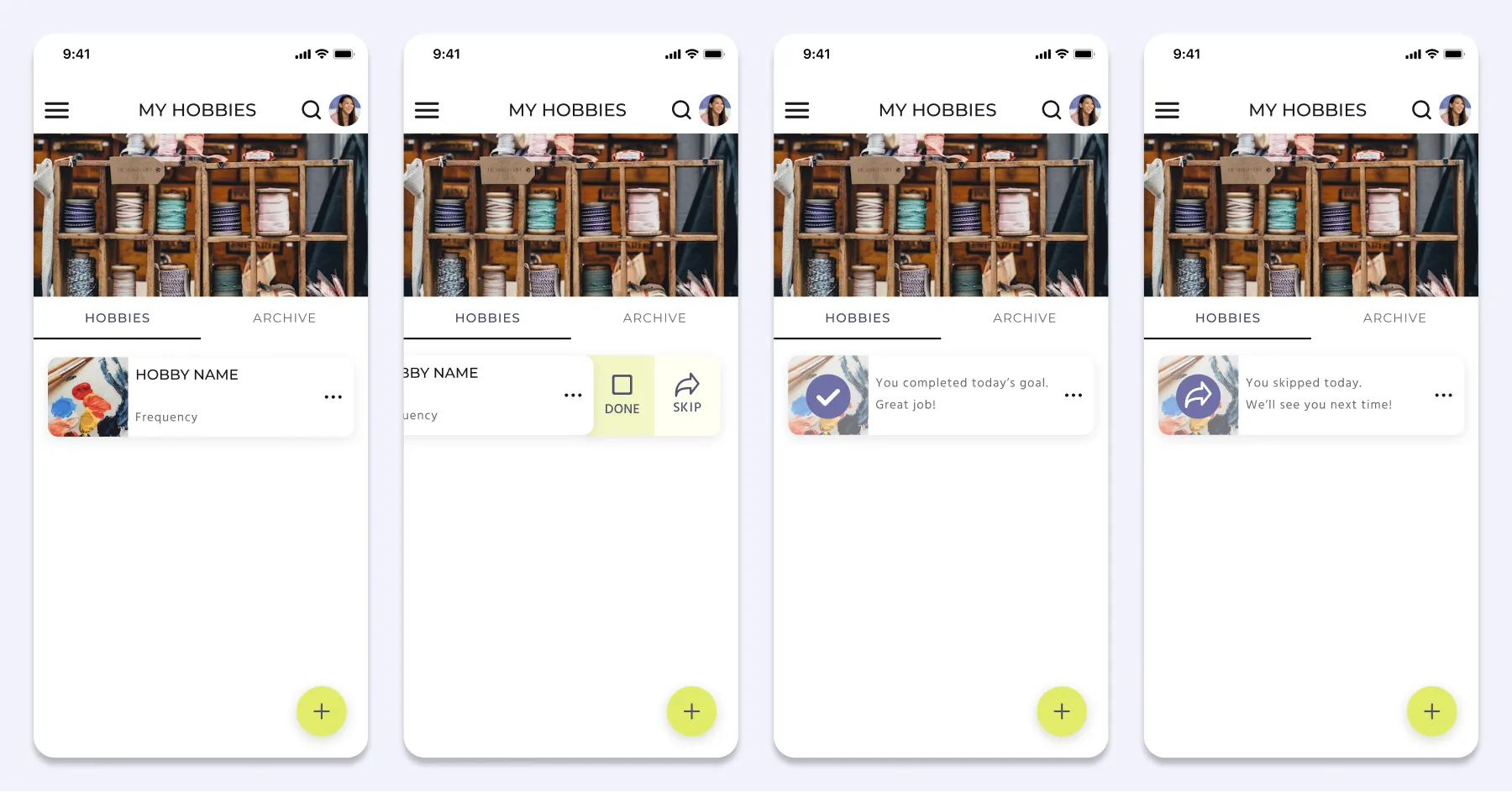
Completing and skipping
MakeTime knows that it's users — like our core persona, Nora — are busy. Swipe gestures make it easy to complete or skip a scheduled hobby on the go. No angry streak breaking notifications, no pressure!
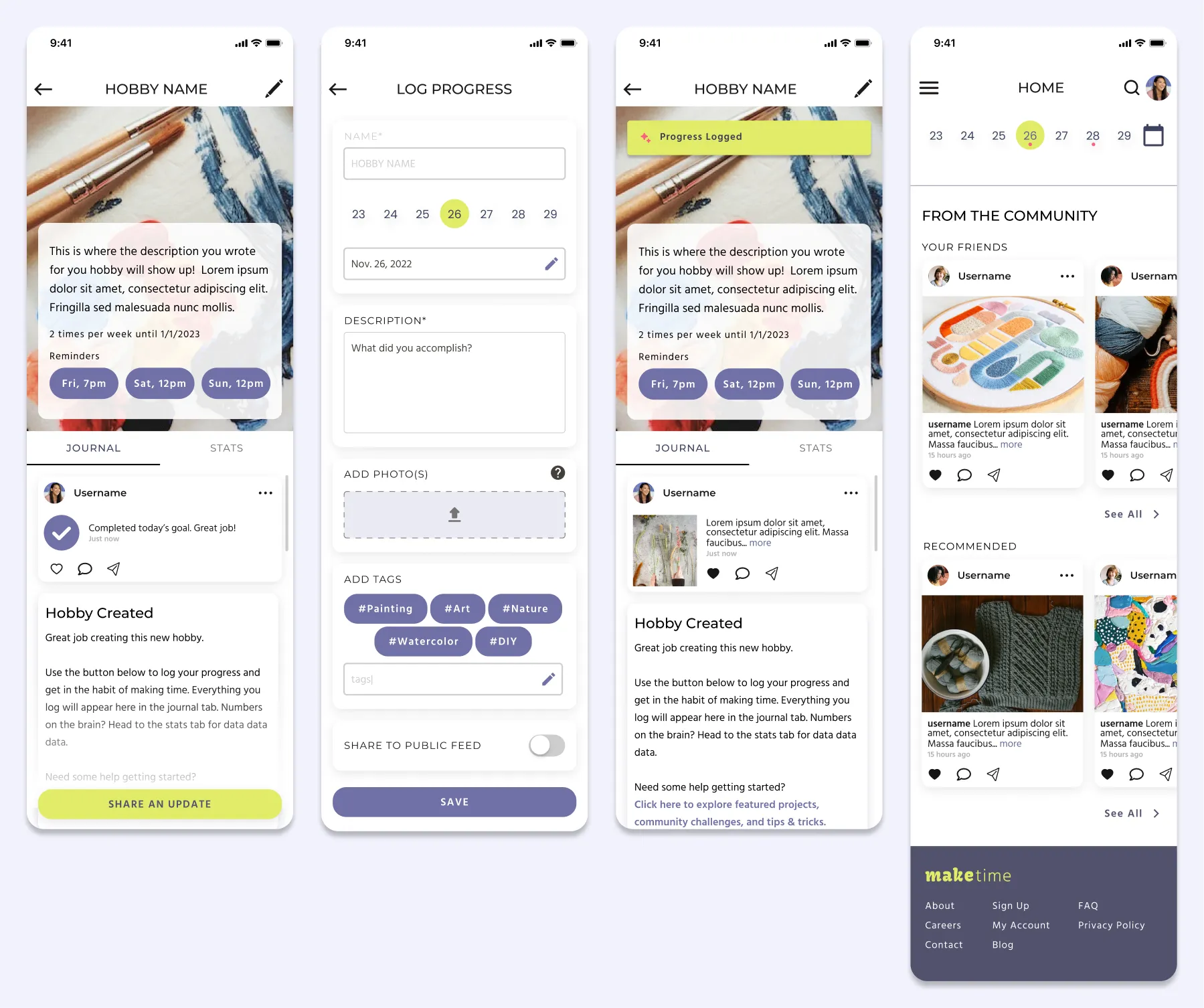
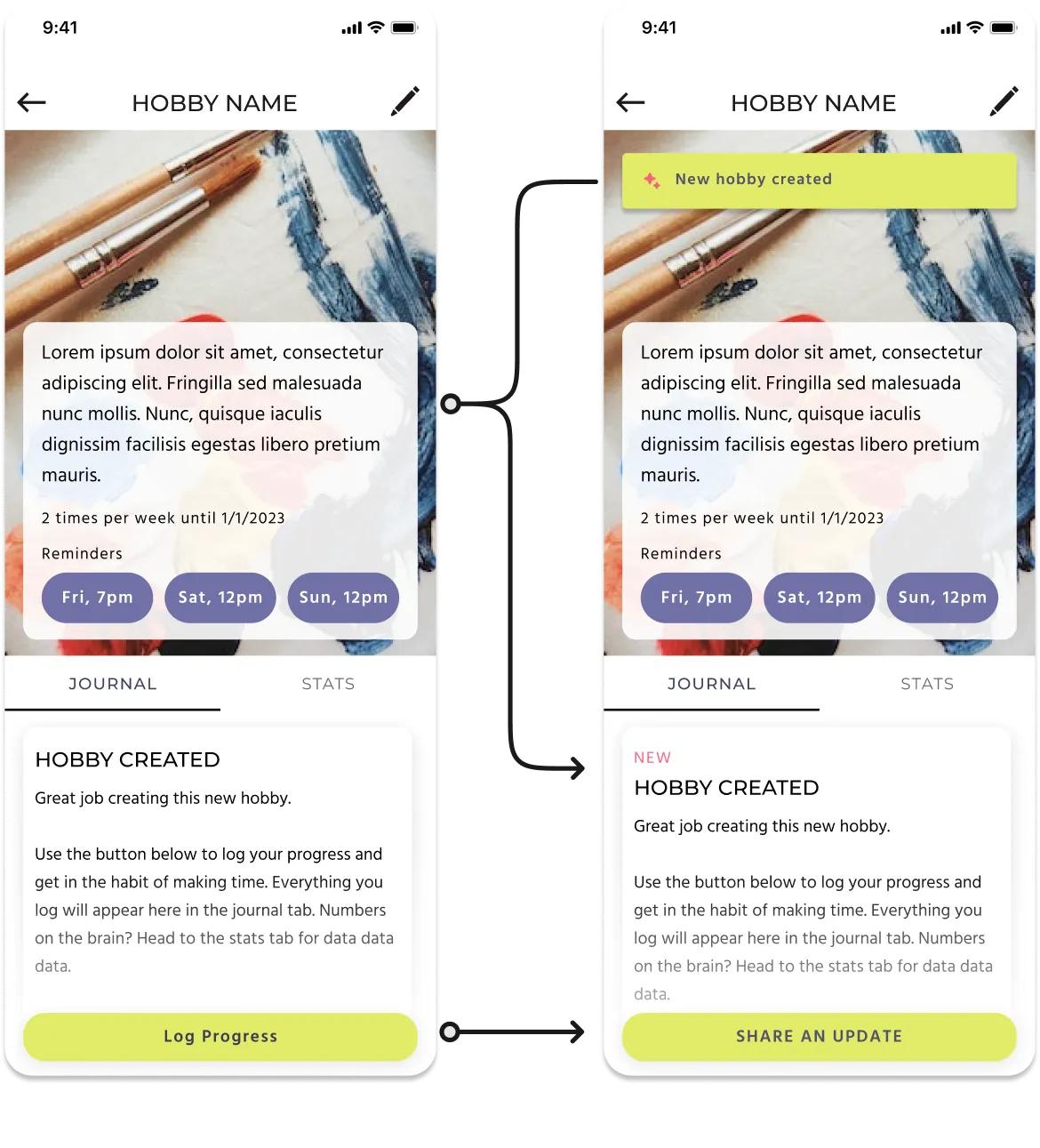
Logging your progress
Studies show habits benefit from accountability, whether to yourself or others. With MakeTime, users can post progress updates at any time. Plus, they can view updates and get inspiration from their friends and the broader community of creative hobbyists.
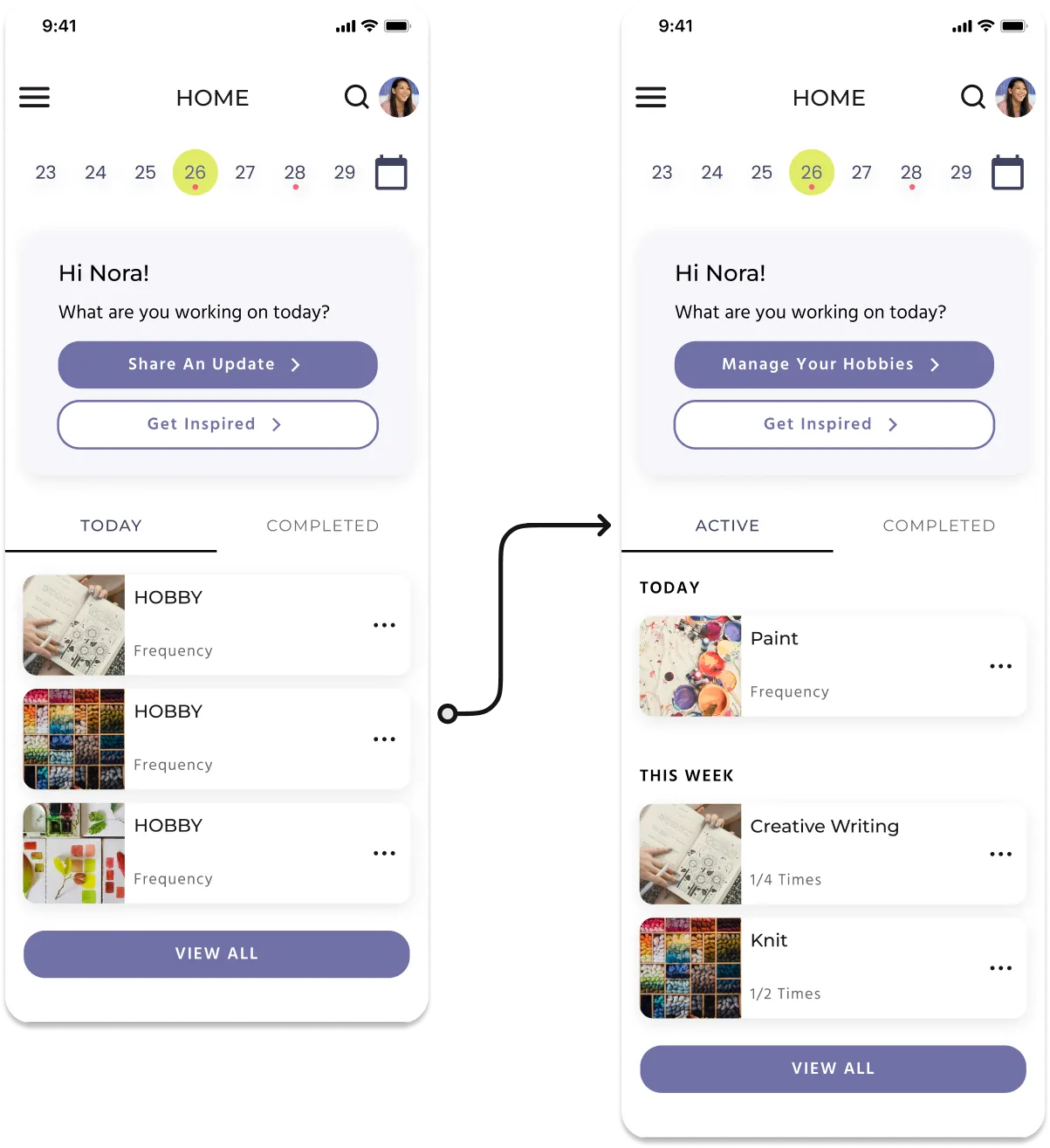
Applying feedback from usability tests
The core experience loops of MakeTime are creating trackable hobbies & logging progress with them.
We conducted 5 user tests and to observe: completion rate, overall satisfaction, and any outstanding usability issues.
User reaction was most positive and did uncover a few areas for improvement:
Go ahead, make time. 🧶
Explore the prototype here:
Where do we go from here?
My time making time
.webp)
Thanks for reading!
Questions? Comments? Ideas? Get In touch.